
Water is sold as ‘packaged drinking water’ in a formal sense. But I have often heard customers asking for “mineral water” when they meant bottled (or packaged) drinking water. In fact, one of the biggest brands sells packaged drinking water, often called ‘mineral water,’ in local shops and even in large shopping malls. Hence, I bought a bottle and asked a person I knew, “Do you know what it is?” “Yes, mineral water”, came the answer; “is it cold?” Of course, technically mineral water is different – either sourced from natural sources which have minerals or sometimes purified and then minerals are added to it.
This made me curious a bit further. Assuming that web searches are a proxy for people’s preferences and language use, I used Google Trends to compare these two terms.
Globally, there was interest in both the terms “mineral water” and “bottled water“. However, there was also a significant divide based on the geo-locations of the searches(and very few seemed to search for “packaged drinking water”). People in the US and Canada predominantly search for bottled water, and those in South Asia search for mineral water.
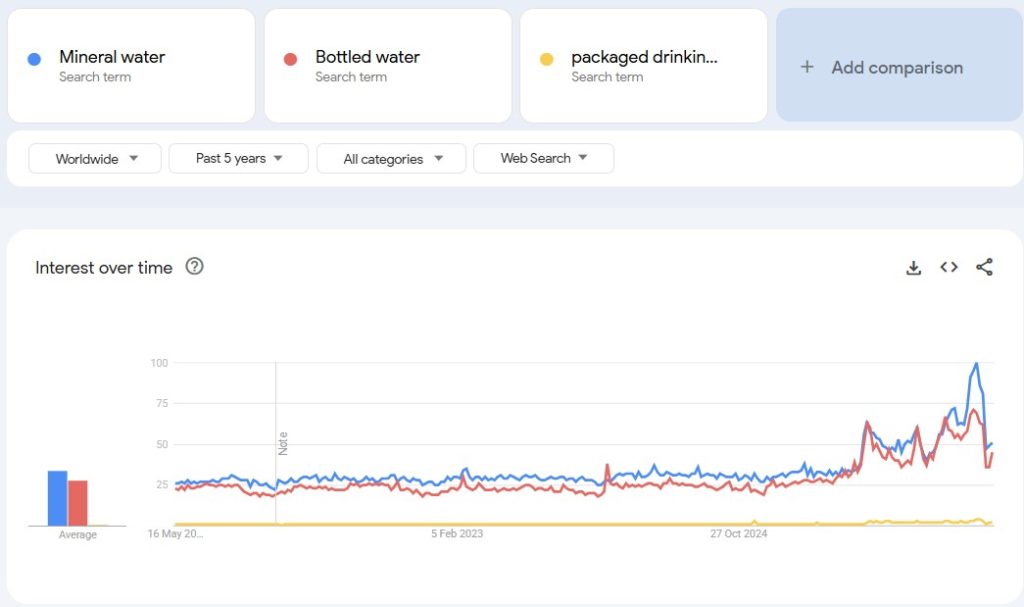
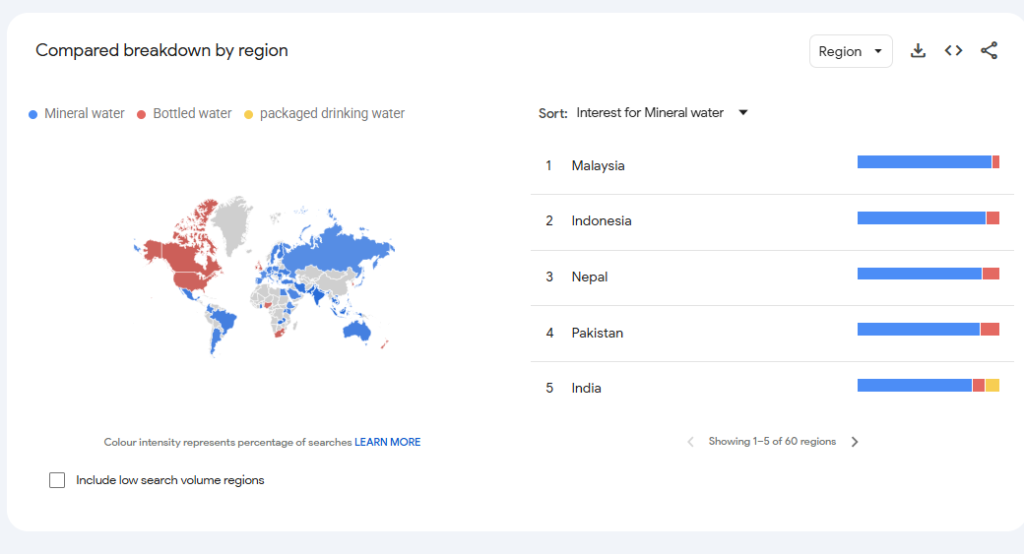
But, it does not follow that people prefer what they search for if there are differences in communication. Hence, to delve further, I then moved away from the search term to the topic – mineral water as a category of drink and packaged water as a category of food.
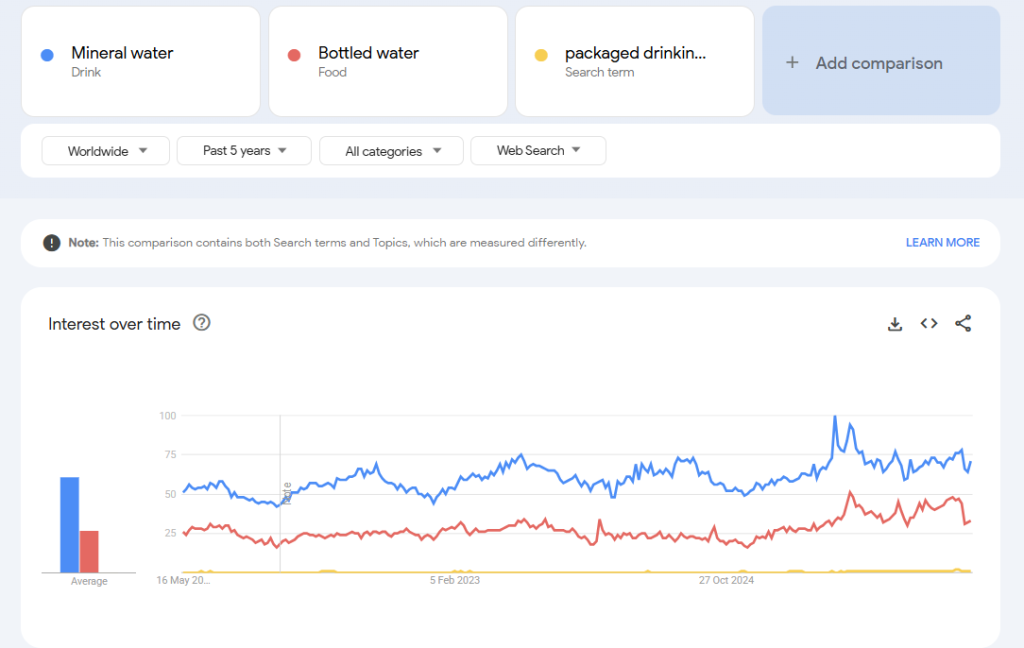
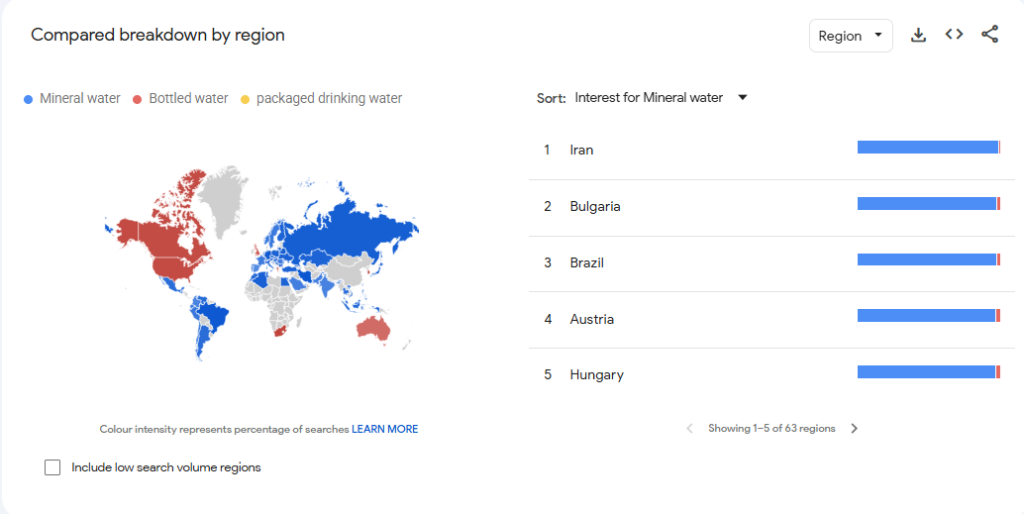
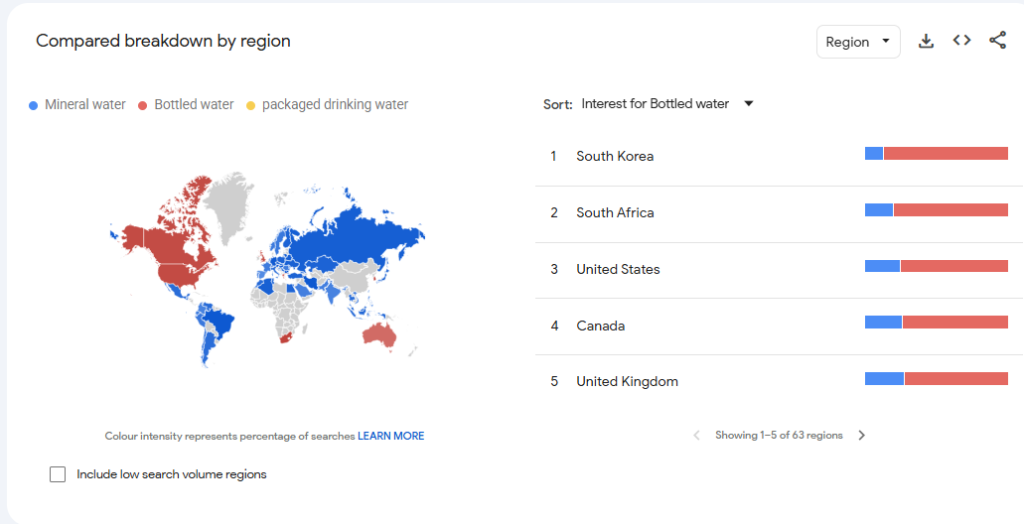
While mineral water remained the more searched one, compared to bottled water, the geographical locales changed. For mineral water, India was far lower (at number 52 from 5), showing that there was not quite the interest in consuming it, but rather how people referred to it, very much in line with my offhand chat with the consumer. “Give me a mineral water bottle” might really mean “Give me a bottled water bottle”. Of course, packaged water is far less expensive than mineral water and has a much larger consumer segment. In U.S. and Canada, (and other big markets like U.K.), people perhaps refer to bottled water as “bottled water”. This is a classic case of daily chats, intuition, and large-scale summary data as a window into how people’s preferences and ways of talking can diverge.
Note: Google Trends is a trademark of Google Inc. The screenshots are for demonstration. The article is not about any brand or company.